

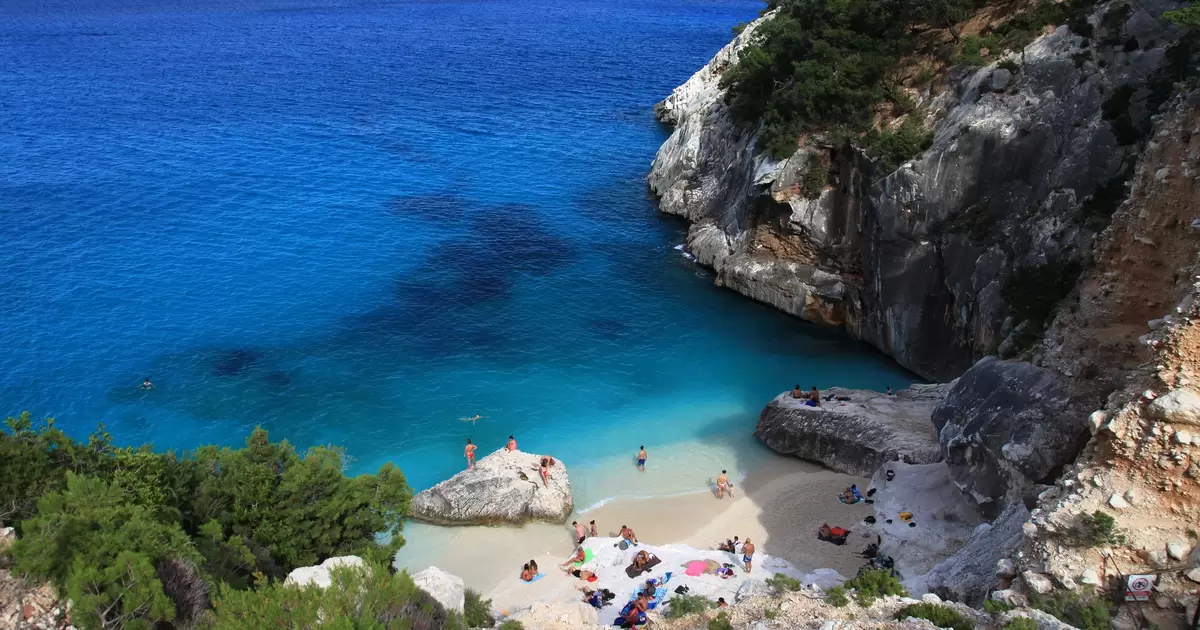
Ferries and resorts reach capacity during the summer months as travelers flock to Sardinia to enjoy its stunning coastline. However, the island’s turquoise waters are only part of the appeal. Ancient traditions merge with varied landscapes on Italy’s second-largest island, where stretches of fine sand and towering cliffs frame a mountainous interior blanketed in Mediterranean scrub.
Whether you are planning a road trip, a long-distance hike, or a tour to discover the hidden coves tucked away along the rugged coast, keep these tips in mind while organizing your Sardinian getaway.
1. Plan to stay at least a week
Spanning approximately 270km from north to south, Sardinia might look small on a map, but exploring every province could take weeks if you want to experience everything the island offers. From touring ruins left by the ancient Nuragic civilization to snorkeling in coastal marine reserves and visiting wineries in the hilly interior, you will feel rushed if you try to pack everything into just a few days.
Dedicate at least a full week to venture beyond the main Traveling to Sardinia in July and August means contending with the notorious Italian peak holiday season—this is not only the hottest time of year, but also when most Italians head to the coast for their annual vacations. Expect heavy crowds and premium pricing on everything from car rentals and hotels to ferry tickets.
Visiting before or after the summer will make your Sardinian trip much more pleasant. The island enjoys sunshine for most of the year, and the swimming season can begin as early as April and last until October. By skipping the peak summer months, you will find more affordable lodging and can travel spontaneously without needing extensive advance planning.
3. Don’t underestimate the heat
The heat should not be taken lightly. Global warming is affecting Sardinia significantly, and record-breaking temperatures have been recorded year after year; in late July 2023, the island’s eastern coast exceeded 48°C (118°F), with a high risk of forest fires impacting much of the dry interior.
July and August are the hottest months. If you are visiting during this time, it is best to avoid cycling or hiking during the middle of the day. Naturally, always carry plenty of water.
4. Fly or book a ferry to get to Sardinia
Sardinia is well-connected to mainland Italy and various European locationse corners of the island. Cagliari, the capital, serves as the primary entry point, while Alghero has long functioned as Ryanair’s main hub on the island, providing frequent, low-cost flights throughout the year
Flying is not the only way to reach Sardinia. Ferries depart from the ports of Livorno and Piombino in Tuscany, Civitavecchia (near Rome), Naples, and Palermo, allowing for a leisurely journey across the Tyrrhenian Sea to the island’s eastern coast. Major operators include Moby, Tirrenia, Grandi Navi Veloci, and Grimaldi Lines. You can continue your journey to Spain by taking the ferry that connects Porto Torres with Barcelona, or by traveling north to Corsica.
5. Driving is the best way of getting around, but there is a shortage of rental cars
Sardinia has a functional rail network, and buses reach areas where trains cannot. However, public transport is slow and does not provide access to more remote regions, where many of the island’s natural wonders are located.
Traveling to Sardinia by ferry allows you to bring your own vehicle from the Italian mainland. Still, it is worth comparing the costs of sea transport with car rental prices, especially during the high season when ships fill up and ticket costs rise significantly.
If you decide to rent a car upon arrival during the peak season, book well in advance. In recent years, Sardinia has faced a shortage of rental vehicles due to a combination of global supply chain issues, the pandemic’s impact on the local economy, and the island’s rising popularity.
6. Be ready to speak (or listen to) different languages
Sardinia is not only geographically diverse but also linguistically rich. While Italian is spoken everywhere, the local language is Sardinian, a neo-Latin tongue officially recognized as one of Italy’s minority languages and listed as endangered by UNESCO. Yet, Sardinian is not the only language spoken by the 1.6 million residents; head destinations. The Costa Smeralda, a 50km (31-mile) stretch of coastline in the island’s northeast, is now home to hotels with rooms costing thousands per night, exclusive restaurants and nightclubs, golf courses, a yacht club, and dreamy villas that host international VIPs.
The publicity surrounding this corner of Sardinia often overshadows its wilder heart, which is best experienced through long-distance hikes that traverse the island’s majestic landscapes. Pack a tent and a sleeping bag to tackle multi-day trails such as Selvaggio Blu, considered one of Sardinia’s most challenging treks, or the Grande Traversata del Supramonte, which runs along the mountains.